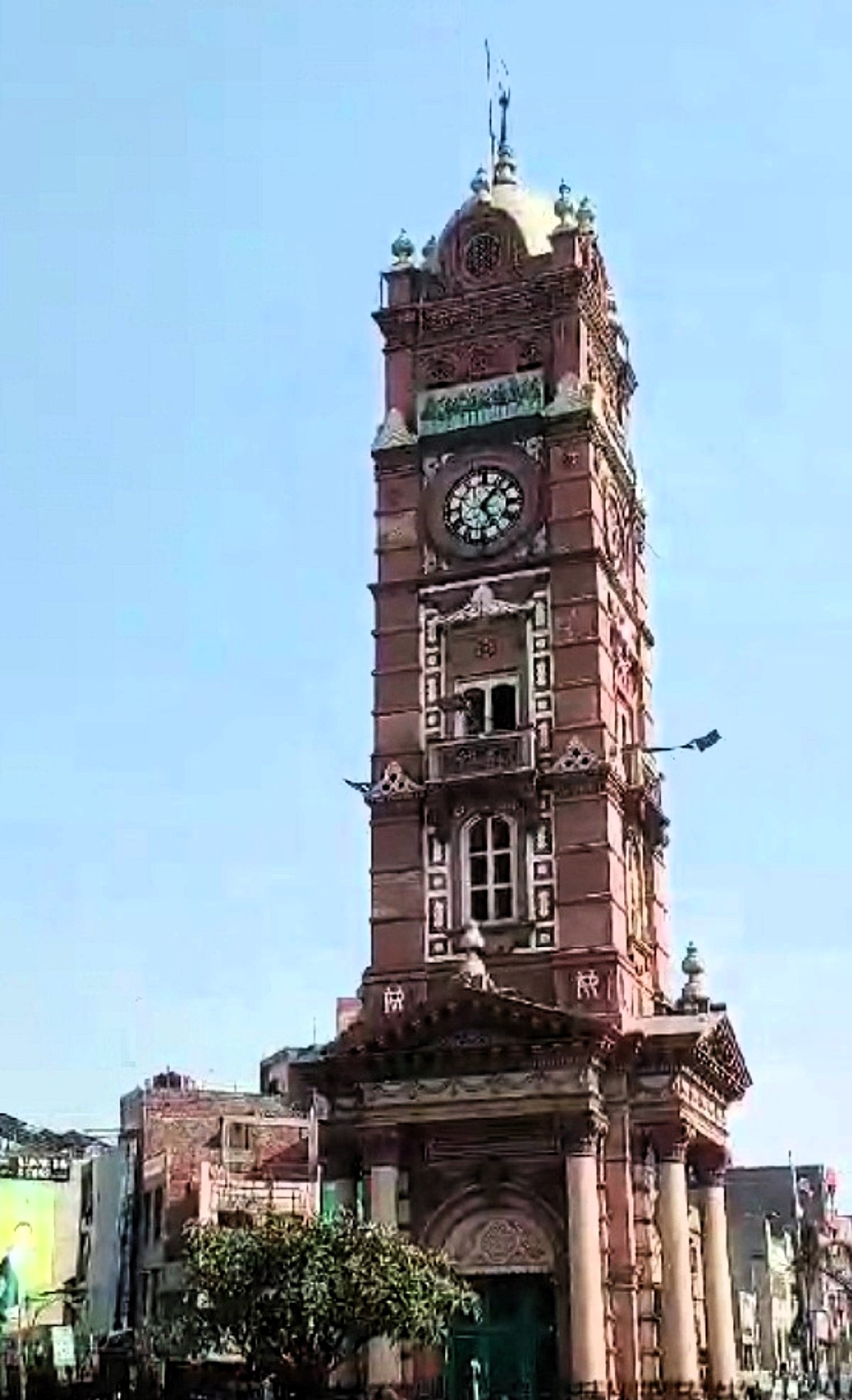
The Faisalabad Clock Tower is more than just a timekeeping structure; it stands as a symbol of the city’s rich history and heritage. Often called the "Manchester of Pakistan," Faisalabad is a major industrial hub located in the heart of Punjab province.
Originally, the city was known as Lyallpur, named after Sir James Lyall, who served as the Deputy Commissioner during British rule. The decision to build the iconic Lyallpur Clock Tower was also made during this period, reflecting the city's colonial history.
The city’s development was guided by the renowned architect Sir Ganga Ram, who envisioned Lyallpur as a thriving agricultural market. The foundation of the clock tower was laid on November 14, 1905, by the British Lieutenant Governor of Punjab, Sir Charles Montgomery Rivas.
Designed in a style reminiscent of the Union Jack, the clock tower is situated at the center of eight bustling bazaars — Aminpur Bazar, Chiniot Bazar, Kachri Bazar, Rail Bazar, Karkhana Bazar, Montgomery Bazar, Jhang Bazar, and Bhavana Bazar. Its prominent structure can be seen from various parts of the city and serves as a visual anchor for Faisalabad.
Locally known as Ghanta Ghar, the clock tower is a focal point of the city’s vibrant commercial life. It was originally built to serve as a practical reference for time, helping residents coordinate their daily routines and activities.
In 1979, the city was renamed Faisalabad in honor of King Faisal of Saudi Arabia, who had been a strong supporter of Pakistan during challenging times. This renaming not only reflected the close ties between Pakistan and Saudi Arabia but also elevated the city’s importance on both a national and international level.
Today, Faisalabad stands as a vital industrial center, especially known for its large textile industry, which significantly contributes to Pakistan’s economy. The clock tower remains a prominent landmark—symbolizing the city’s past, present, and future. It continues to attract tourists and locals alike, who come to admire its intricate design and capture its historic charm.